House clearance in Redbridge

Redbridge House Clearance provides a straightforward house clearance service in Redbridge for homes that need rooms, lofts, garages or whole properties cleared with care. We handle the removal of everyday household items, bulky furniture, mixed contents and accumulated waste, with the aim of leaving the space ready for its next stage. Whether you are dealing with a single-room sort-out or a fuller property clearance, the work is planned around the access, the volume and the type of items involved.
Our service is built for customers who want practical help rather than a one-size-fits-all approach. A clearance can involve dismantling suitable items, separating reusable furniture from general waste, and managing what should be taken away in a tidy, methodical way. We also support situations where belongings need to be handled carefully because the property is furnished, partly vacant or in the middle of a move. Pricing and quotes can be discussed once the scope is clear.
For many households, the main benefit is having a single team manage the heavy lifting, sorting and loading so the remaining work is simpler. That might mean clearing old furniture before renovation, removing surplus items after a family change, or emptying rooms that have become difficult to use. If you need a practical starting point, tell us what needs to go and we can help shape the next step. Request a quotation
Full property clearances and room-by-room work
A house clearance is rarely just about carrying items out of a doorway. It often starts with deciding what stays, what is to be removed and whether particular items need extra care because of size, weight or condition. We can work through one room at a time or handle a fuller clearance across a property, depending on what is more practical for the household and the layout of the premises. The result is a tidy process rather than a rushed emptying of the space.
Where a home contains a mixture of furniture, storage boxes, loose belongings and older items, the sequence matters. Heavier pieces are usually handled first, followed by smaller contents that can be sorted and loaded safely. When an item cannot be moved whole, suitable dismantling may be required before removal. This approach helps keep hallways, staircases and doorways manageable, especially in homes with narrow access or shared internal routes.
What a house clearance can include
The service can cover a range of domestic contents, including beds, wardrobes, tables, shelving, chairs, white goods, bagged household waste and general clutter. It may also be suitable when a property has been left partially furnished and you need the remaining contents taken away. Where items can be reused, recycled or disposed of appropriately, they are handled with that in mind rather than simply treated as one mixed load. Different item types often need different handling, and that is reflected in the way the work is organised.
Furniture, disposal and item sorting

Many clearance jobs involve furniture that is still structurally sound but no longer wanted, along with pieces that are damaged, outdated or too large for the available space. We deal with these situations by separating item types so the clearance remains orderly. If a sofa, cabinet or bed frame needs dismantling before it can be removed safely, that can be included as part of the work where practical. This makes the process more controlled and reduces avoidable disruption inside the property.
Our furniture disposal and furniture clearance work is useful when rooms contain only a few unwanted pieces or when several areas of the home need to be tackled together. It can also help where belongings are mixed, such as a bedroom with old furniture, bags of soft contents and miscellaneous storage items. The objective is to remove the items that are no longer needed while keeping the worksite tidy and the remaining contents undisturbed as far as possible. If you are weighing up the options, the most useful starting point is often simply a clear list of what needs removing.
To keep the job well organised, we normally look at three practical factors before work begins:
- the type and quantity of items to be cleared
- the access available through doors, stairs, lifts or outdoor routes
- whether any items need dismantling or special handling before removal
Lofts, garages and awkward storage spaces
Storage spaces often accumulate items that are easy to leave in place but harder to deal with later. Loft clearance can involve boxed belongings, old suitcases, seasonal items, unused furniture and general stored household contents. Garages often contain a similar mix, plus tools, broken equipment, shelving and long-forgotten items that have built up over time. We approach these areas carefully so the removal work stays controlled rather than becoming a scramble through clutter.
These spaces can be awkward because of low headroom, limited access, uneven floors or the need to carry items through the main property. In practical terms, that means the method matters as much as the volume. Items may need to be sorted where they are found, then carried out in a sequence that protects the surrounding area. Clear access paths and a sensible order of work can make a noticeable difference when a loft or garage contains more than one type of item.
Loft and garage clearances are often best planned around the items themselves rather than the room label. A few heavy boxes, for example, may need more handling time than a larger number of light objects. Likewise, a garage packed with mixed household items, old furniture and general waste may require a more staged approach than a simple single-category collection. The aim is always to remove what is no longer needed without leaving the area half-finished or difficult to use afterwards.
Office and business waste removal
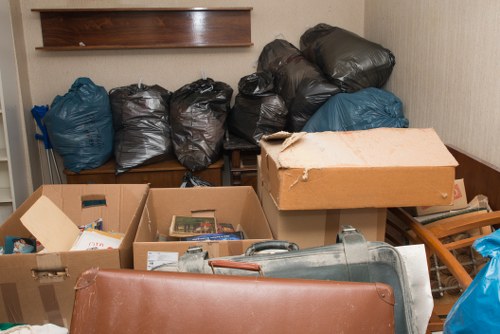
Although the main service is domestic house clearance, we also handle office clearance and business waste removal where the disposal needs are straightforward and defined. This can include desks, chairs, storage units, filing furniture, boxed contents and other workplace items that are no longer required. The same careful approach applies: identify the load, plan the removal route and separate items in a way that keeps the process organised.
Commercial clearances often need attention to timing and access because offices and work premises may still be in use while the clearance is underway. That means the sequence of removal matters, particularly where furniture is positioned in shared areas or where there are narrow routes through the building. If a project includes a mix of office furniture and general waste, the work can be adapted to suit the contents rather than forcing everything into the same method. For customers comparing options, it can be helpful to discuss the specific item types in advance.
Some business clearances are small and focused, such as removing surplus furniture from a single office. Others may involve more general contents from a workspace that is being reconfigured. In either case, the practical aim is to take away the items that are no longer needed and leave the area clearer for reuse, handover or refurbishment. Where you need to plan the next step, a concise description of the items and access is usually enough to begin. Business waste removal is available as a related service when the load is workplace-focused.
Waste removal, recycling and responsible handling
Not every job is a full property clearance. Sometimes the need is for a smaller, more direct waste removal service that takes away a mixed load of unwanted household items, broken possessions or leftover materials. In those cases we focus on the practical removal itself: loading, transporting and disposing of the items in line with the type of material involved. That keeps the service flexible for customers who have a smaller amount to clear but still want it handled properly.
Recycling and sustainability matter most when the load is sorted with care before it leaves the property. Different item types may be suitable for different handling routes, and some contents are better treated as furniture, some as general waste and some as a mixed domestic load. We also pay attention to how the work is arranged so reusable items are not treated in the same way as damaged or unusable ones. If you want to understand how this applies to a particular load, the item list is more useful than a vague estimate.
Recycling and sustainability gives more detail on the approach to sorting and disposal. For householders, this can be especially relevant when the clearance includes both furniture and ordinary waste, because the contents are not all the same and should not be handled as if they are. Keeping the load organised from the outset helps the overall service feel calmer and more efficient.
Household clearances for moves, changes and empty properties
House clearance needs often arise at moments of change: after a move, before a refurbishment, when downsizing or when a property has become difficult to keep on top of. The service is designed to make those transitions easier by removing the contents that are no longer needed and creating a clearer starting point for whatever comes next. That might mean a partial clearance of selected rooms or a fuller emptying of a home that has reached the end of its current use.
Where the property is still occupied, sensitivity and order matter. Items may need to be left in place until a room has been sorted, or particular belongings may need to be separated before the clearance proceeds. Where the property is vacant or partly vacant, the same measured approach still applies, but the work can often move more quickly because there are fewer interruptions. Either way, the service is shaped to the contents, access and priority list rather than to a fixed template. House clearance covers the core domestic service in more detail.
About Redbridge
Redbridge is a London borough in the east of the city, formed in 1965 from parts of Essex and now stretching from inner suburban areas to outer residential neighbourhoods. It takes its name from the historic Red Bridge, a crossing associated with the River Roding, and the borough contains a mix of long-established streets, parks, town centres and transport corridors. Wanstead Flats, part of the wider Epping Forest landscape, provides open grassland on the western side of the borough, while Valentines Park in Ilford is known for ornamental grounds, lakes and formal gardens. The borough’s built environment is varied, with Victorian and interwar housing, civic buildings, high streets and newer developments all appearing within a relatively compact area. Ilford remains the best-known commercial centre, with significant shopping, transport links and a long history as a suburban hub, while other districts such as Wanstead, Woodford, Gants Hill and Seven Kings each have their own character. Redbridge also includes places of worship, libraries, schools and leisure facilities that reflect its long-standing residential role. The borough’s position on major routes and railway lines has helped shape its development, but it retains pockets of green space and quiet streets that sit alongside busier thoroughfares. This combination of urban density, open land and layered local history gives Redbridge a distinctive east London identity.
Furniture and contents clearances with a practical finish

Furniture clearance often sits at the centre of a wider house clearance because bulky items shape the amount of space, labour and time required. We therefore treat furniture removal as part of the overall plan rather than as an afterthought. Sofas, wardrobes, beds, tables and similar pieces are assessed for ease of movement, potential dismantling and the most sensible removal order. That keeps the job efficient without overlooking smaller items around the room.
For customers, the decision is usually whether a room should be cleared in one pass or handled as a sequence of smaller areas. A bedroom, for example, might contain a bed, wardrobe, drawers, bags of miscellaneous belongings and loose household items. If the furniture is dealt with first, the remaining contents are easier to manage and sort. This is also useful in homes where access is tighter, because larger objects often determine how the rest of the work must be carried out. A useful next step is to gather the items you know need removing and note any that are heavy, fixed or awkward.
Our approach is to keep the work practical, proportionate and clear from the outset. That means speaking plainly about what is involved, identifying any constraints and agreeing the scope before the clearance begins. It avoids confusion later and helps the customer understand what will happen to each part of the job. About us gives a broader overview of the company.
How to prepare a quotation
A sensible quotation starts with accurate information about the property and the items to be removed. A list of rooms, approximate quantities and any particularly heavy or awkward pieces is usually enough to begin. Photographs can also help where a room contains mixed contents, stacked items or furniture that may need dismantling. This does not need to be complicated: the goal is simply to make the scope clear enough that the clearance can be planned properly and priced in line with the actual work involved.
Access details matter as well. Narrow stairs, limited parking, upper floors, shared entrances and long carrying routes can all affect how the job is organised. If a property is occupied, it may also help to note whether certain rooms need to be left untouched or whether items are to be separated before removal. When a clearance is arranged around facts rather than assumptions, the result is usually smoother for everyone involved. For a general reference point on this, see pricing and quotes.
If you are ready to move forward, contact us with a brief outline of the work and we will take it from there. A clear description of the property, the main items and any access issues is usually enough to begin a quotation. For smaller jobs, a short note can be sufficient; for larger ones, a fuller list helps us understand the scale. Either way, the process is straightforward and designed to save time.
Clearances for specific rooms and contents

Some customers need a focused clearance rather than a whole-house service. That may involve a loft that has filled up over the years, a garage that no longer functions as storage, or a single room where old furniture and miscellaneous belongings need to be removed. These smaller jobs still benefit from a structured approach because the work can involve lifting, sorting and handling a surprising number of different item types. The service is therefore shaped to the room and the contents, not just to the overall size of the property.
Special attention is often needed where contents are mixed. A garage, for instance, may contain tools, cabinets, small appliances, broken items and general clutter in one space. A loft may hold suitcases, boxes of paperwork, seasonal decorations and old household goods. By separating these categories at the outset, we can keep the clearance controlled and avoid unnecessary handling. If the room includes items that are particularly bulky or difficult to move, it helps to mention that early so the right approach can be used.
Whatever the starting point, the aim is the same: to remove the unwanted contents cleanly and leave the area easier to use. If you want to arrange a house clearance in Redbridge, get in touch for a quotation. Tell us what needs clearing, and we can help you plan the practical next step.